Published by Chris Townsend
Last updated Dec, 27 2025

Moving from Wisconsin to Florida
Are you thinking about Moving from Wisconsin to Florida? is it a good palace or not? Thousands of people relocate to the southeastern state every year from all over the country, mainly to enjoy the sunny weather. Florida also offers a diverse culture, beautiful landscapes, and a thrilling outdoor life.
That’s before you mention the strong economy, great schools, excellent road network, and thriving health industry.
What Should You Look at Before Moving from Wisconsin to Florida?
Before you begin packing, we recommend creating a timeline for the move and sticking to the schedule throughout. Your schedule should cover four points;
- Find a great place to live
It’s nice that you’ve settled in the state of Florida. But, Florida is a large area with dozens of great cities and hundreds of neighborhoods. So, where specifically do you want to live? We recommend living close to work or school. However, consider the main cities of Orlando, Tampa, Miami, and Jacksonville if you’re not bound by any conditions.
- Find the right mover
The big question here is – what makes a great long-distance mover? How do you know that you’re dealing with a legitimate and reliable interstate mover? Although we can’t provide an exhaustive list of characteristics, always verify that the company is appropriately registered, duly licensed, and adequately insured. Also, check review sites and the BBB to evaluate the mover’s reputation.
- Packing and loading
Full-service movers typically provide packing and loading services. But, it usually comes at an extra cost. As such, many people often choose to DIY packing and loading. If you chose to follow this route, too, you need to acquire packing supplies early and get friends and family to help. Don’t forget to plan for unloading and unpacking.
- Storage and extras
Whether you’re working with a full-service mover or a specialized apartment mover, you may be required to budget for a few aspects of the move separately. For instance, if you need to store your items for a while as you find a house, some relocation companies offer both moving and storage services – but at extra cost. The same applies to car shipping and commercial relocation.
The Cost of Moving from Florida to Wisconsin
Anyone moving to a new location should be aware that their relocation will include a large financial expenditure. However, it is simpler to put money aside for your move once you are aware of the total cost. The difficulty with relocation costs is that there are no set charges, and a number of factors contribute to this.
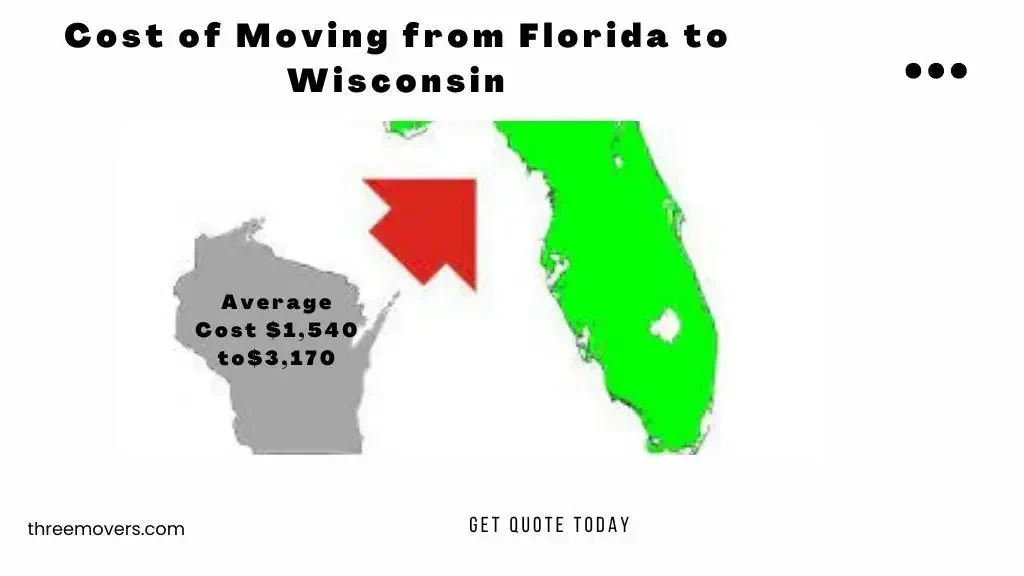
Cost of Moving from Florida to Wisconsin
Quick answer: The average cost of relocating from Wisconsin to Florida is $1,540 to$3,170. However, the actual cost tends to vary depending on several factors, including the volume of the move, specific services offered, and the actual distance traveled.
Beware of Moving Scams
The moving industry is currently facing a rise in moving scams and fraudulent imposters out to con customers of hard-earned money. To be safe, consider the following;
- Don’t pay huge deposits: If a moving company asks for more than 20% as a deposit for the relocation, treat them as criminals.
- Don’t sign a blank contract: Some criminals will have you sign a blank contract and then use your personal information to steal from you. Don’t be a victim.
- No proper registration, no deal: If the company can’t provide proof of their registration and licensing, they’re likely not properly registered/licensed.
- Does it operate under different names? Trustworthy companies don’t operate under different names. So, a company operating under different names online and offline is questionable. The same applies to companies that keep changing their brand names.
- Too many negative reviews are a red flag: If your online and social media checks find that the company is always entangled in a scandal, avoid them. You don’t want the drama.
If you have any questions about our moving service or other information, Contact us at (888) 202-0036, and our customer care representative will answer all your questions.
Recommended Article: Moving To Florida From Illinois
Frequently Asked Questions
Moving from Wisconsin to Florida typically costs $2,200–$5,500 for a 1–3 bedroom home, based on 1,300–1,600 miles of travel. Pricing is influenced by move size (studio–5BR), weight or cubic feet, 2–4 movers, packing needs, stairs or elevators, long-carry distances, and fuel costs. Summer demand and Florida delivery zones can increase rates. This is an interstate move regulated by FMCSA, not a local move. Learn more about pricing factors through an interstate moving service.
Transit time from Wisconsin to Florida averages 3–7 days, depending on distance, routing, and whether the shipment is direct or consolidated. Pickup usually takes 1 day for apartments and 1–2 days for larger homes. Delivery windows may shift due to traffic on I-75, weather, or seasonal volume spikes. Long-distance carriers schedule defined delivery ranges rather than exact dates. See timing expectations for a long distance moving service.
The most cost-efficient time is October through April, when demand drops after peak summer season. Winter moves from Wisconsin require planning around snow and freezing temperatures, while Florida summers bring heat and hurricane risks. Avoid late May through August if possible, as rates and booking times increase. Early spring and late fall offer the best balance of availability, pricing, and weather stability.
Florida’s heat and humidity require planning before packing. Use moisture-resistant packing for electronics, documents, and wood furniture. Climate-sensitive items may need climate-controlled transport. Pack lightweight clothing separately for arrival and avoid leaving candles, aerosols, or liquids in boxes. Delivery schedules can be affected during hurricane season, so flexibility helps. Full packing support is available through a packing and unpacking service.
Yes. A checklist helps manage an interstate move with multiple deadlines. Key steps include decluttering, inventory creation, address changes, school and medical record transfers, vehicle registration timing, and utility coordination. Start 6–8 weeks before pickup. Long-distance moves involve stricter documentation and delivery windows than local moves. Use a structured moving checklist to stay on schedule.
Yes. Many households ship one or more vehicles to reduce drive time and wear. Open transport is most common and cost-effective, while enclosed carriers protect high-value cars. Typical transit runs 3–5 days. Pricing depends on vehicle size, operability, and pickup flexibility. Auto transport is often coordinated alongside household goods using professional car moving services.