Published by Chris Townsend
Last updated May, 08 2026

Most moving problems come from missed timing, not the physical move itself. Forgetting to transfer utilities, confirm parking access, or book movers early can create unnecessary delays and added costs. Whether you are moving locally or across the country, following a structured moving checklist timeline helps keep every task organized before moving day arrives.
This moving checklist timeline breaks the process into manageable weekly steps, starting eight weeks before your move and continuing through your first days in the new home. Renters and homeowners can use this guide to organize packing, paperwork, utilities, travel logistics, and moving day preparation in one place.
Set Up Your Moving Command Center First
Before packing begins, create a dedicated moving folder or digital workspace to keep quotes, receipts, schedules, and important records organized. Having one central location for your moving checklist timeline makes it easier to track deadlines and avoid missing key tasks during the move.
What to include:
- Inventory photos and moving estimates
- Lease agreements or closing paperwork
- Utility account information and confirmation numbers
- School, medical, and pet records
- Receipts for deposits and moving expenses
If you are still comparing movers, Three Movers can help connect you with licensed moving companies for local and long-distance relocations.
Printable Move Tracker
- 6 Weeks Before Moving: Request moving quotes and compare services
- 4 Weeks Before Moving: Photograph valuables for insurance records
- 2 Weeks Before Moving: Transfer utilities and confirm service dates
- 1 Week Before Moving: Finish final packing and label boxes by room
The 8-Week Window: Lock In Rates and Avoid the Moving Crunch
Booking movers early usually gives you better pricing and more scheduling flexibility, especially during busy seasons. Starting your moving checklist timeline about eight weeks in advance gives you enough time to compare movers, organize packing, and avoid last-minute stress.
- DIY Truck: Best for smaller local moves with help from friends or family.
- Labor-Only Movers: Ideal if you already rented a truck but need loading assistance.
- Full-Service Movers: Best for larger households or long-distance moves requiring packing and transportation support.
Early Planning Checklist
- Week 8: Finalize your move date and budget. Declutter unused items to reduce packing volume and moving costs.
- Week 7: Secure boxes and tape. Create a non-essentials packing zone for items like books or decor.
- Week 6: Compare three quotes and flag specialty items like pianos or antiques.
When comparing local moving companies, verify that movers are properly licensed and insured. For interstate moves, check the company’s USDOT registration through the FMCSA database before booking.

Build Your Packing System: Weeks 3 Through 5
A consistent labeling system makes unpacking much easier after moving day. Organize boxes by room, priority, and contents so important items stay accessible when you arrive at the new home.
- Week 5: Pack non-essentials. Photograph electronic connections before disconnecting devices and measure large furniture before moving day.
- Week 4: Confirm utility shutoff dates and book travel lodging.
- Week 3: Request school records and collect medical and vet files.
Before the final two weeks, complete smaller administrative tasks such as returning library books, updating school contacts, and notifying local organizations about your move.

Two-Week Moving Checklist Timeline: Digital Accounts and Hazardous Items
The final two weeks before moving day usually involve administrative updates, address changes, and final packing tasks that are easy to overlook without a clear moving checklist timeline.
Digital and Administrative Tasks
- Official Updates: Submit your USPS address change and update your DMV, voter registration, and tax information if needed.
- Financial and Medical Accounts: Notify banks, insurance providers, schools, and pharmacies about your address change.
- Online Services and Apps: Update delivery apps, toll accounts, subscriptions, and account recovery phone numbers.
Smart Home and Prohibited Items
Reset smart home devices before moving and remove personal account access from items like cameras, thermostats, and smart doorbells. At the same time, separate hazardous materials such as propane, gasoline, paint, bleach, and aerosols, since most moving companies cannot transport them legally.
The Final 24 Hours in Your Moving Checklist Timeline
Preparing appliances, parking access, and overnight essentials the day before the move helps reduce delays and keeps moving days organized.
Week 1 Checklist
- Confirm arrival windows and parking logistics.
- Finish all packing and labeling.
- Separate valuables and furniture disassembly tools.
24-Hour Sequence
- Defrost the Refrigerator: Empty and dry it at least 24 hours before the move
- Protect Floors and Entryways: Use floor coverings in high-traffic areas
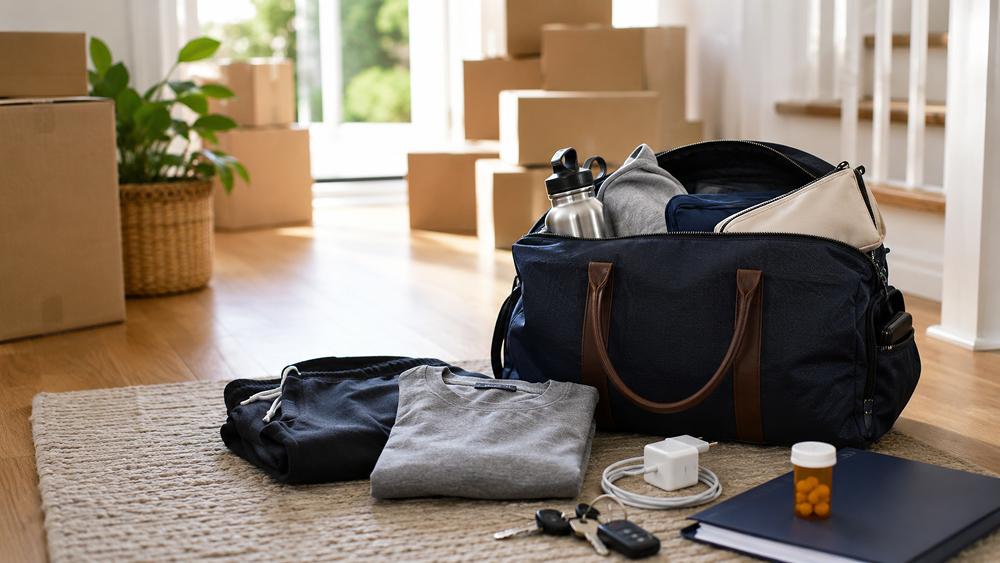
- Prepare an Essentials Bag: Pack medications, chargers, documents, and overnight clothing separately
- Charge Devices and Secure Keys: Keep important items accessible during transport
- Dispose of Trash: Remove remaining garbage and keep cleaning supplies nearby
Completing these final tasks ahead of time helps moving the day run more smoothly and reduces last-minute stress.
Moving Day and Post-Move Admin: Finishing the Job
Keep important personal items in a separate “first night” bag or container so they remain easy to access after arriving at your new home.
Moving Day Priorities
- Final Walk-Through: Check the attic, garage, and closets for forgotten items.
- Inventory Photos: Take photos of valuable furniture and electronics before loading the truck.
- Arrival Strategy: Separate Open First boxes for immediate bedding and kitchen needs.
First Week Admin
Inspect boxes and furniture shortly after delivery so any damage or missing items can be documented quickly. During your first week, confirm mail forwarding, activate local utilities, and arrange services such as trash collection or internet installation.
How to Turn Your Moving Checklist Timeline into Action
A moving checklist timeline works best when tasks are scheduled clearly and shared across everyone involved in the move. Breaking the process into smaller weekly goals helps reduce stress and keeps important deadlines from being missed.
Mark Your Start Line
Fix your move date on the calendar and count back exactly eight weeks to set your deadline for major logistics.
Delegate Ownership
Copy this timeline into a shared checklist and assign every task to a specific person in your household.
Audit Progress
Schedule two recurring 15-minute check-ins each week to review completed items and adjust for delays.
If you still need moving assistance, compare quotes from licensed local and long-distance movers before your moving date approaches.
Start Your Moving Checklist Timeline Today
Following a structured moving checklist timeline helps organize packing, scheduling, and administrative tasks before moving day arrives. Starting early gives you more flexibility, fewer surprises, and a smoother overall moving experience.
Frequently Asked Questions
Copy the timeline blocks in this article into a document like Google Docs to create a printable checklist. Add columns for Task Owner, Due Date, and checkboxes before printing. A physical command center gives your everyone involved in the move a shared reference throughout the move.
No. A USPS change of address forwards your mail, but it does not automatically update your private accounts.
Most moving companies will not transport hazardous or flammable materials such as propane tanks, gasoline, aerosols, paint thinner, or certain cleaning chemicals.
Inventory all smart devices such as Ring doorbells or Nest thermostats, run a factory reset, and unlink them from your account. This keeps your data private and lets the new occupant pair the devices easily. Verify with your realtor which smart fixtures are included in the sale.
Book local movers at least four weeks in advance. Long-distance moves often require eight weeks of lead time to secure the best rates. Availability fills quickly during peak summer months and weekends.