Published by Chris Townsend
Last updated Jan, 08 2026
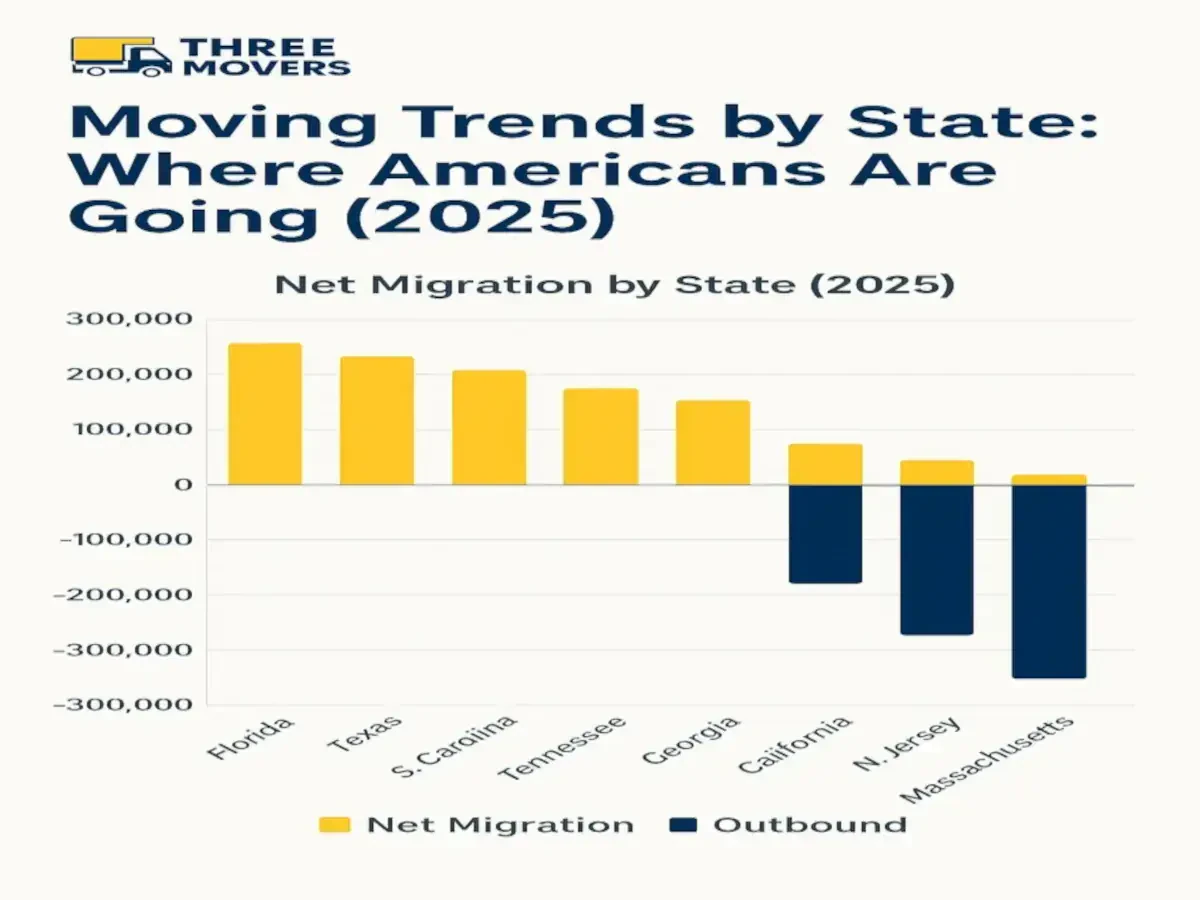
Americans are relocating at lower rates than they did during the pandemic boom, but state-to-state migration continues to reshape the U.S. population map. Interstate move volume dropped slightly over the past year, yet millions still filed address changes and booked long-distance movers. This data-driven roundup breaks down the latest 2025 migration trends, highlighting the biggest inbound and outbound states and the most significant interstate flows.
All statistics below are based on the most recent available data from authoritative sources, including the U.S. Census Bureau, USPS, U-Haul, and national moving companies.
Net Migration by State: Who’s Gaining, Who’s Losing
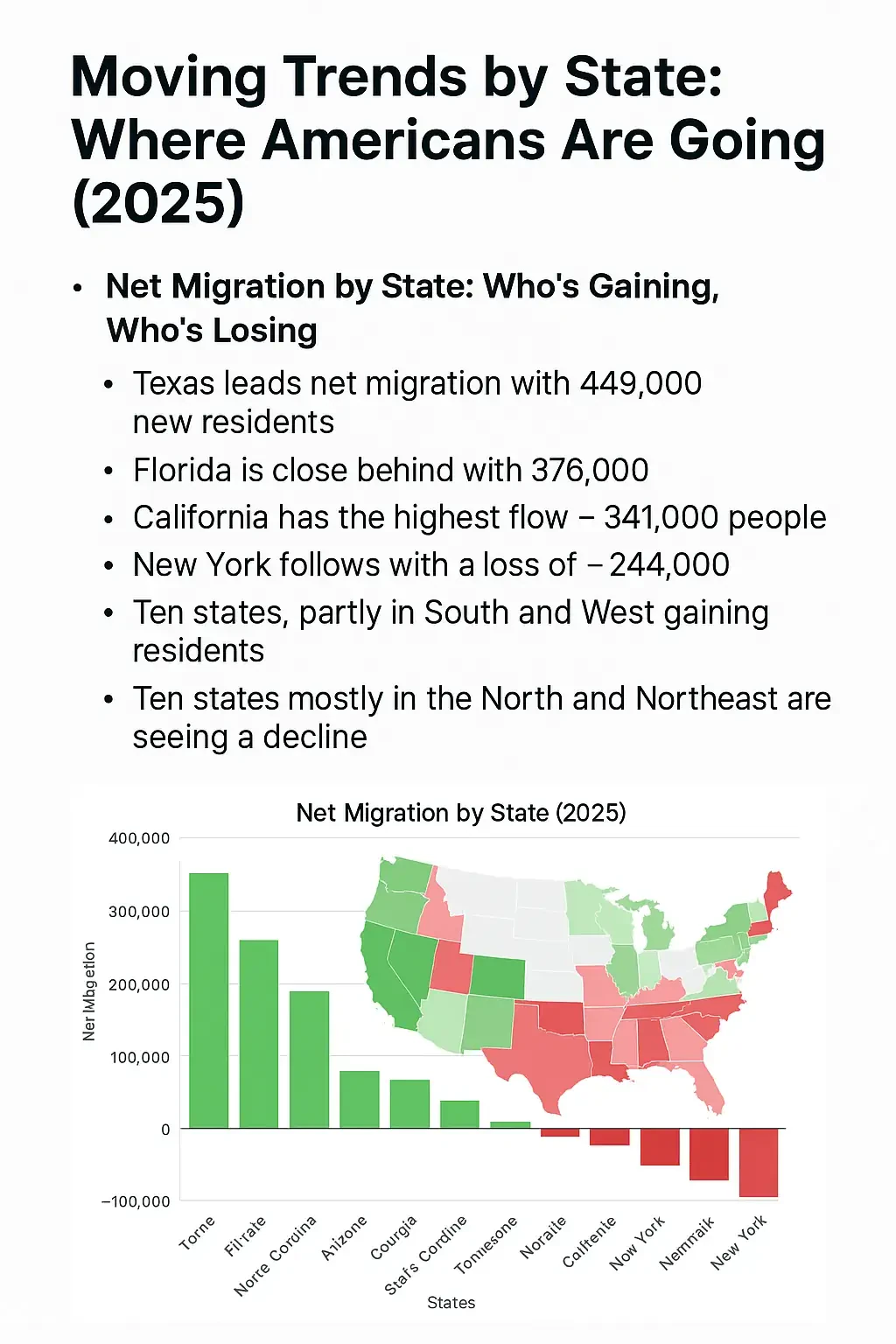
- In the most recent year, 26 states experienced net inbound migration, while 25 saw net outbound flows (U.S. Census Bureau).
- Texas added over 85,000 new residents from other states in a single year, making it the top domestic migration gain.
- North Carolina (+82,000), South Carolina (+68,000), and Florida (+64,000) also saw strong net gains as relocation demand shifted southward.
- Florida’s net migration has slowed considerably since the pandemic peak—down from +314,000 in 2022 to +64,000 in the latest year.
- California remains the largest net loser, with over 239,000 more people leaving than moving in, according to USPS change-of-address data.
- Other outbound-heavy states include New York (–121,000), Illinois, New Jersey, and Massachusetts, continuing multi-year decline trends.
- Domestic net losses in states like California and New York have been partially offset by international immigration and birth rates, which is why population drops haven’t been more severe.
Top State-to-State Migration Flows
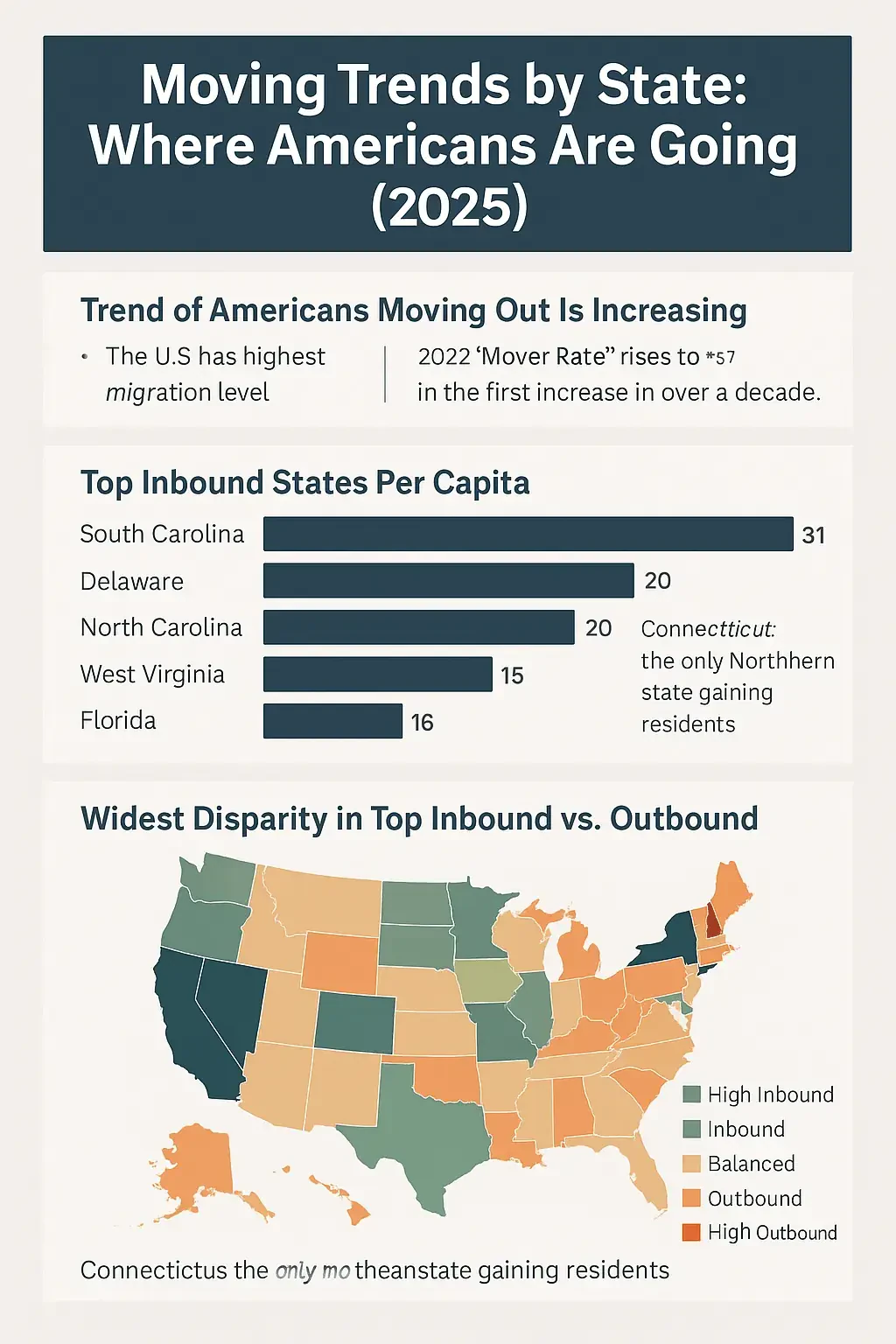
- California to Texas is the largest interstate migration route in the country. Over 102,000 people moved from California to Texas in a single year (U.S. Census).
- New York to Florida also remains a high-volume corridor, with more than 91,000 movers following that route.
- Other major flows include New Jersey to Florida (47,000), California to Florida (51,000), and Illinois to Florida (39,000), based on U.S. Census and USPS data.
- Florida ranked as the number-one destination for outbound residents from nine different states, more than any other.
- Despite its outbound numbers, California remains the top inbound destination for movers from Western states like Nevada, Arizona, and Washington.
- U-Haul’s 2023 Growth Index confirmed that Texas and Florida continue to receive the most one-way DIY moves, while California ranked last for net inbound moves.
- Allied Van Lines reports that South Carolina, Arizona, Tennessee, and North Carolina were among the most moved-to states for professional movers in the past year.
Generational Migration: Who’s Moving and Why
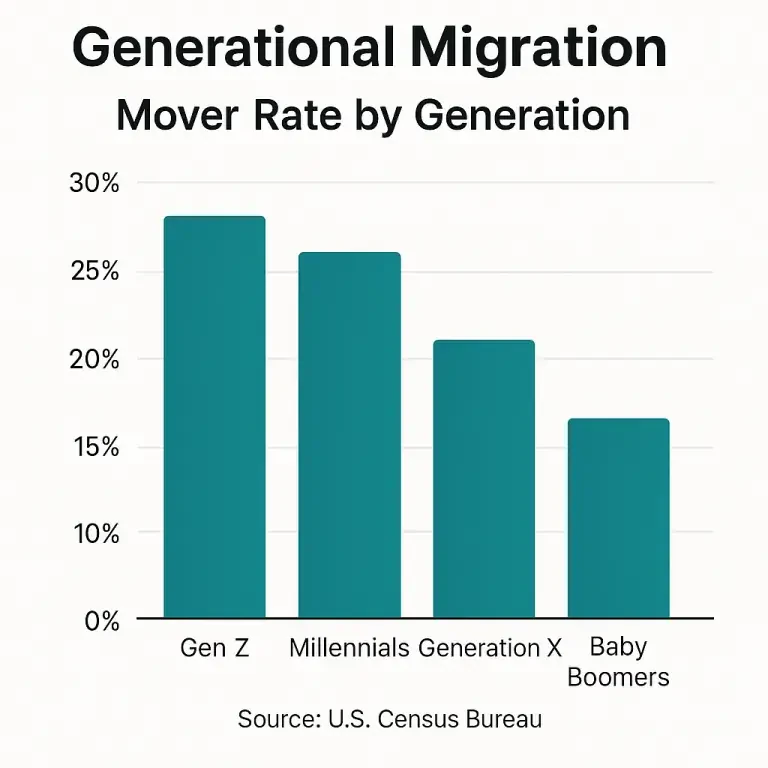
- Gen Z now leads all generations in move rate—18.3% of Gen Z moved last year, narrowly ahead of Millennials at 16.7%.
- Gen Z continues to migrate toward large cities like New York, L.A., and Houston, even as older generations exit those metros.
- Millennials are increasingly leaving major urban hubs like NYC and Chicago for mid-size Southern cities such as Charlotte and Jacksonville.
- Gen X and Boomers move far less frequently but often relocate for retirement to warm, tax-friendly states like Florida and Arizona.
Affordability Migration: Cost of Living Drives the Shift
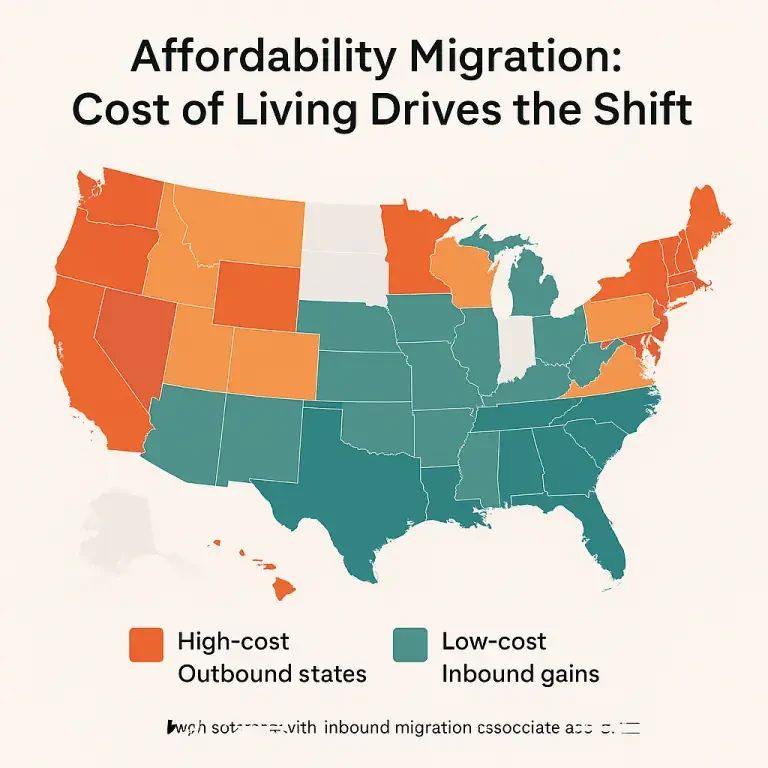
- States with lower housing costs and no income tax—like Florida, Texas, and Tennessee—continue to draw the most movers.
- California, New York, and Illinois experienced the steepest net outflows, driven largely by high housing prices, taxes, and insurance premiums.
- Over 50% of movers from the Northeast relocated to the South, where living costs are more manageable.
- Rising costs in previously popular destinations (e.g., South Florida) are now beginning to reverse inbound migration trends.
Metro Exodus: Cities Losing the Most Residents
- Los Angeles, San Francisco, and New York lead the nation in outbound moves.
- These metros are shedding residents due to high costs, remote work trends, and quality-of-life factors.
- Popular new destinations for those leaving include Phoenix, Dallas, Charlotte, and the Carolinas.
- Despite this trend, Gen Z migration into cities remains strong, providing a demographic offset to the older residents who are leaving.
Reasons Why Americans Are Moving in 2025
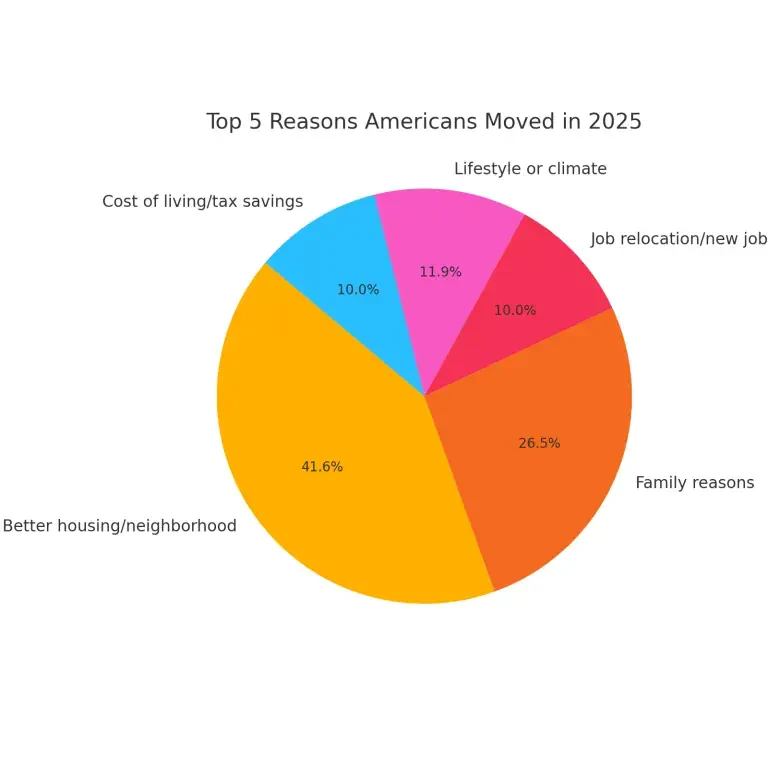
- Housing leads all moving motivations, with over 40% of movers seeking a better home, neighborhood, or more affordable living.
- Family changes — such as marriage or starting a new household — drive about one-quarter of moves.
- Job-related relocation continues to decline as remote work expands, reducing the need to move for employment.
- Lifestyle upgrades and climate shifts are increasingly common — more Americans are relocating for better weather or to avoid natural disasters.
Remote Work Migration Trends
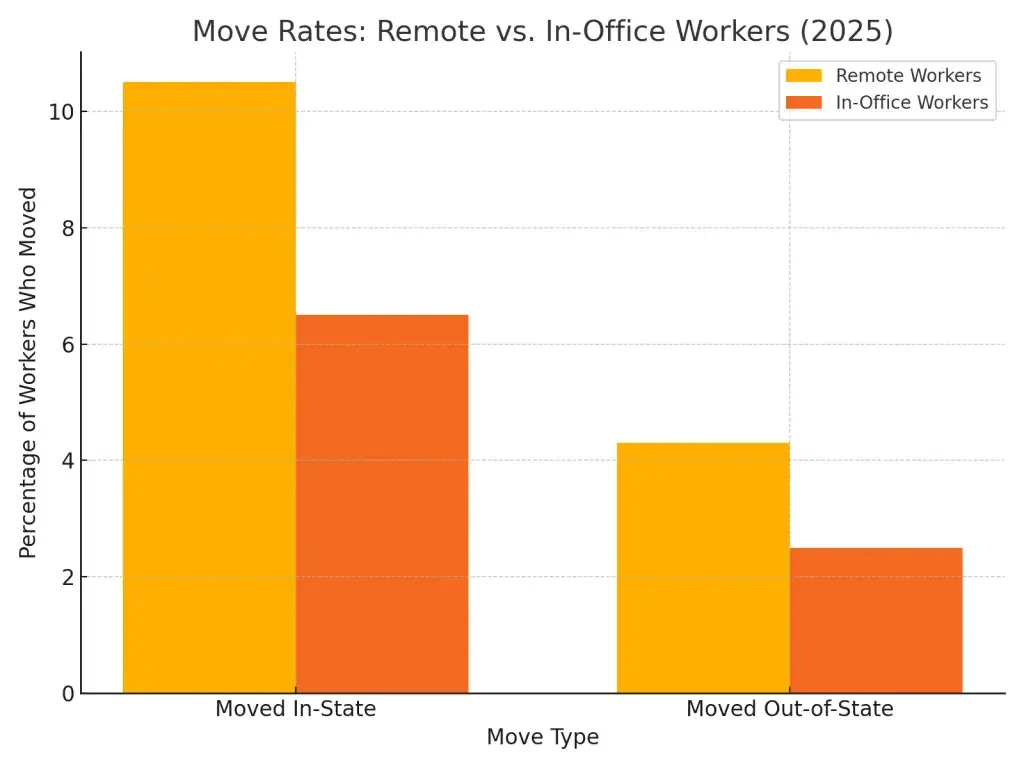
- Remote employees are twice as likely to cross state lines compared to office-bound workers.
- Flexible work has led to a shift away from coastal metros toward more affordable Sun Belt states, such as Texas, Florida, and North Carolina.
- Many cite “change of scenery” and quality of life as core motivators, even above cost.
- Suburbs and mid-sized cities are growing fastest as remote professionals bypass big urban cores.
Where Retirees Are Moving
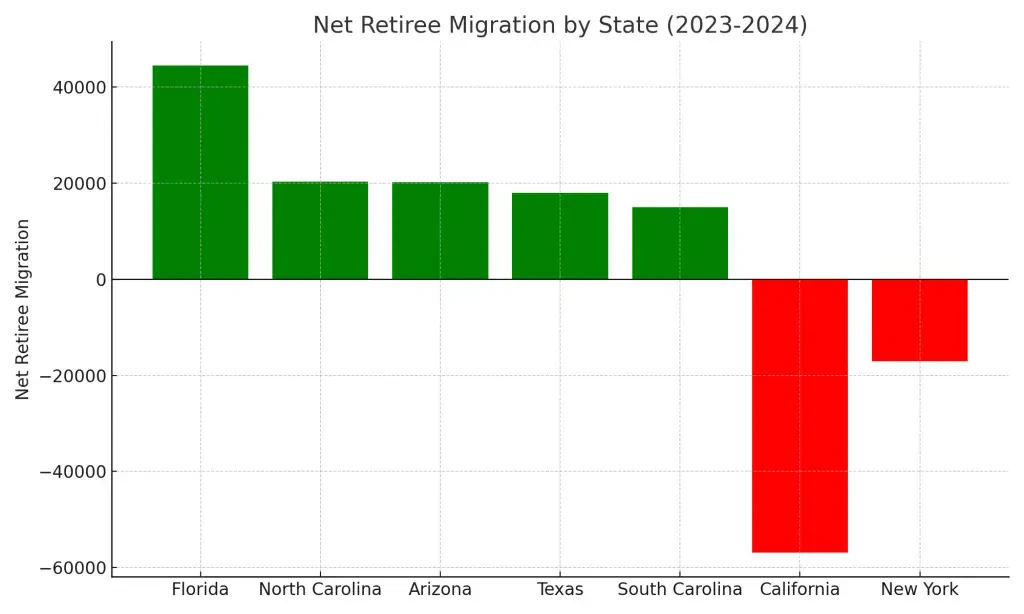
- Nearly 1 million retirees relocated to new states last year, with Florida, North Carolina, and Arizona leading the way.
- These states offer lower taxes, warmer climates, and abundant retirement communities.
- California and New York are experiencing significant outflows of older residents due to high costs and restrictive policies.
- Cities like Mesa, AZ and Henderson, NV are emerging as top retiree destinations.
Business Relocations Across America
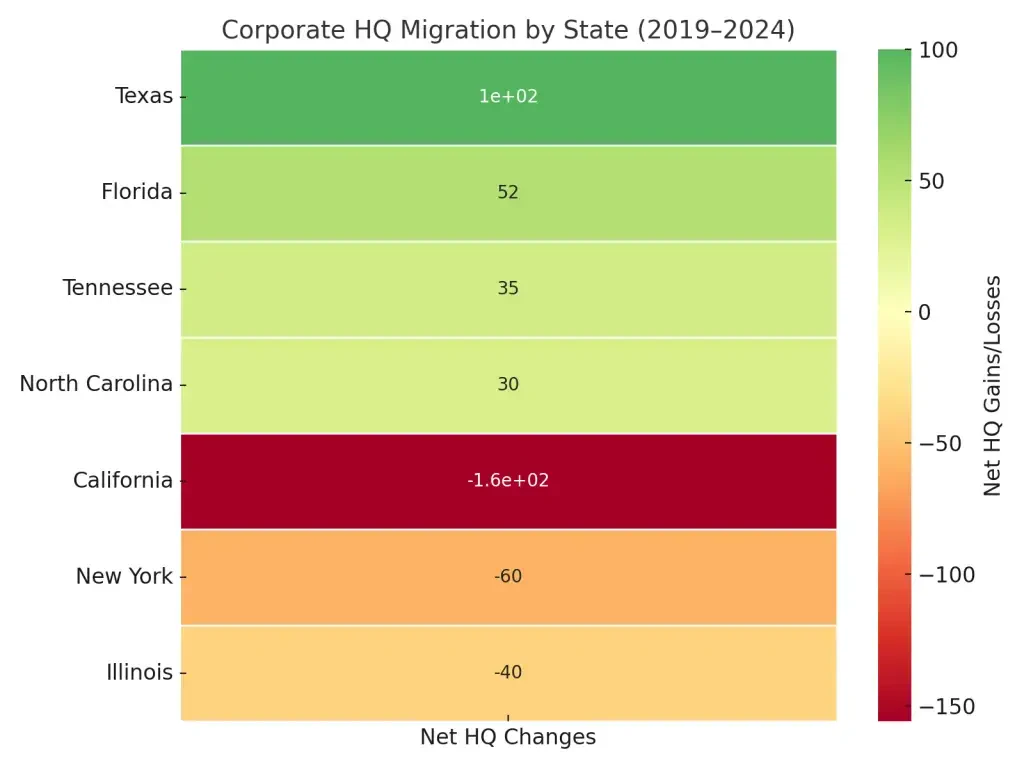
- Major corporations are relocating from high-cost metros to tax-friendly, business-friendly states.
- Texas and Florida rank first and second in inbound corporate moves.
- The Dallas area alone added over 100 headquarters in recent years.
- Factors include lower real estate costs, access to talent, and more flexible regulations.
Fewer Moves, But Bigger Shifts
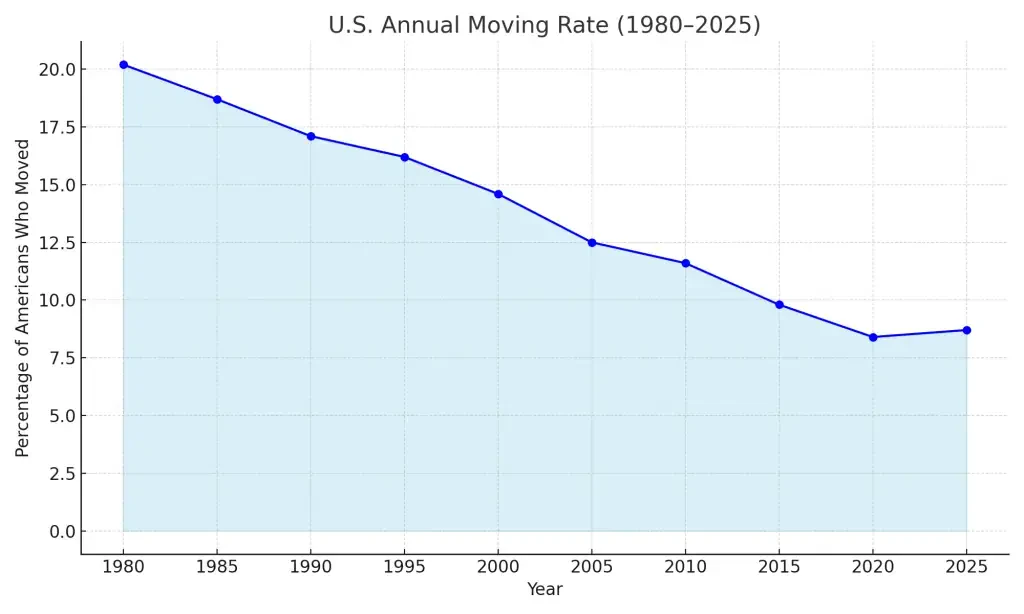
- The U.S. moving rate is near an all-time low, with under 9% of Americans changing residence each year down from 20% in the 1980s.
- Those who do move are more likely to relocate across counties or states, reflecting more deliberate and significant life decisions.
- Local “around the corner” moves have declined sharply, as high costs and mortgage lock-in keep people in place.
- Southern states continue gaining population despite lower overall mobility.
Final Takeaways
Migration patterns in 2025 reflect a more strategic and selective America. Fewer people are moving overall, but those who do are making bold, distance-driven changes — often for better housing, climate, taxes, or lifestyle. The shift toward the South and interior continues to accelerate, driven by both individuals and businesses.
If flexibility, affordability, and quality of life define the next chapter of mobility, then the Sun Belt is leading the way.