Published by Chris Townsend
Last updated Jan, 24 2026
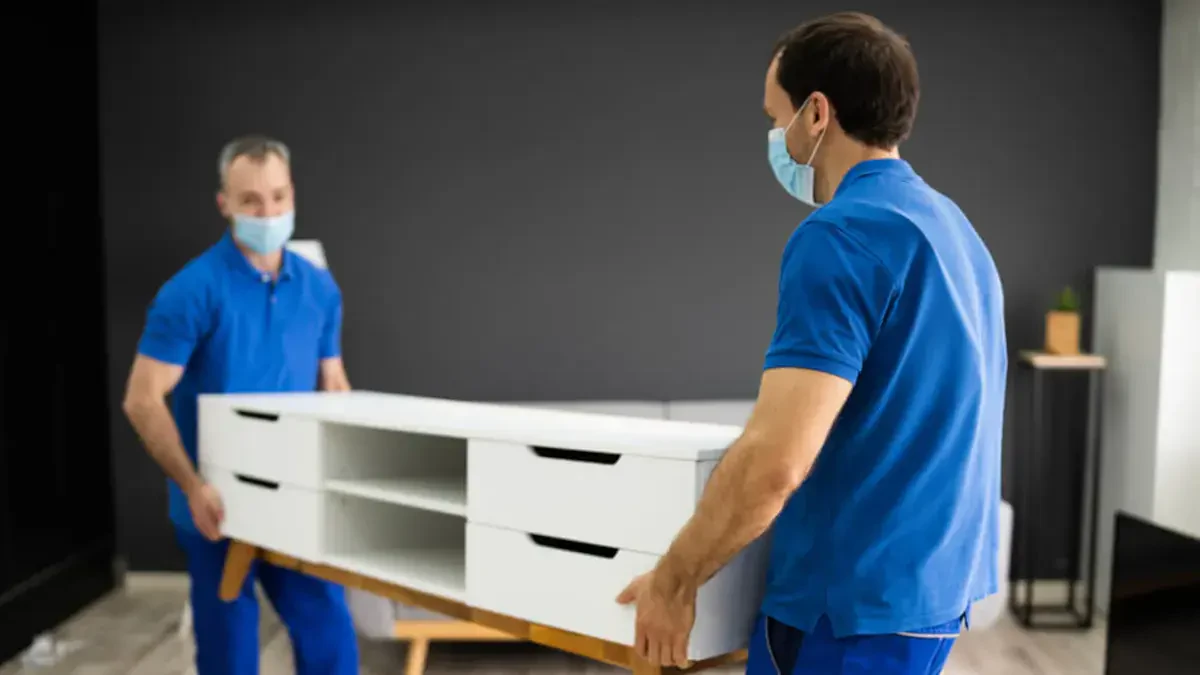
Moving furniture up or down stairs is one of the biggest challenges of moving. Stairways can be narrow, have corners you’ll have to navigate, and require one person to lift the high end of furniture while another person lifts the low end. All these things make it difficult to maneuver, whether you’re dealing with outside stairs in an apartment building or indoor stairs in the home. For indoors, you should also take measures to make sure that both your furniture and the stairs aren’t damaged. To make your next move involving stairs as safe as possible, follow these tips.
Measure Twice, Lift Once
Before you even attempt to move anything up or down stairs, you need to know what dimensions you’re dealing with and how much room have. This means you should measure the furniture that is going to be moved, as well as the width and height you’ll have to work within the stairwell. Naturally, you’ll want to disassemble any furniture that can be taken apart to make the job easier, but if that’s not an option, you’ll want to know what sort of space you’re working with so you have a plan going in.
The Right Equipment Makes the Job Easier
Having the right equipment to make moving easier is tremendously helpful, and perhaps nowhere is this truer than when stairs are involved. A hand truck with straps is ideal for shifting many items up or down stairs (especially up) since the wheels allow you to slide an item on the stairs one by one if needed. Be sure to use the straps if you’re using a dolly to avoid tipping, which can be a serious safety hazard.
Whether you need relocation help just for navigating stairs or need a company that handles every aspect of your move, Three Movers is a great option! With years of experience, we’ve handled every type of shift and tackled all the challenges that come with them, all at an affordable price you’ll love! To learn more about our customized solutions, or if you’d like a FREE quote, call us today at (888) 202-0036! Moving estimates are 100% FREE of charge, no matter the size or distance of your move!
Indoor Stairs Need Protection
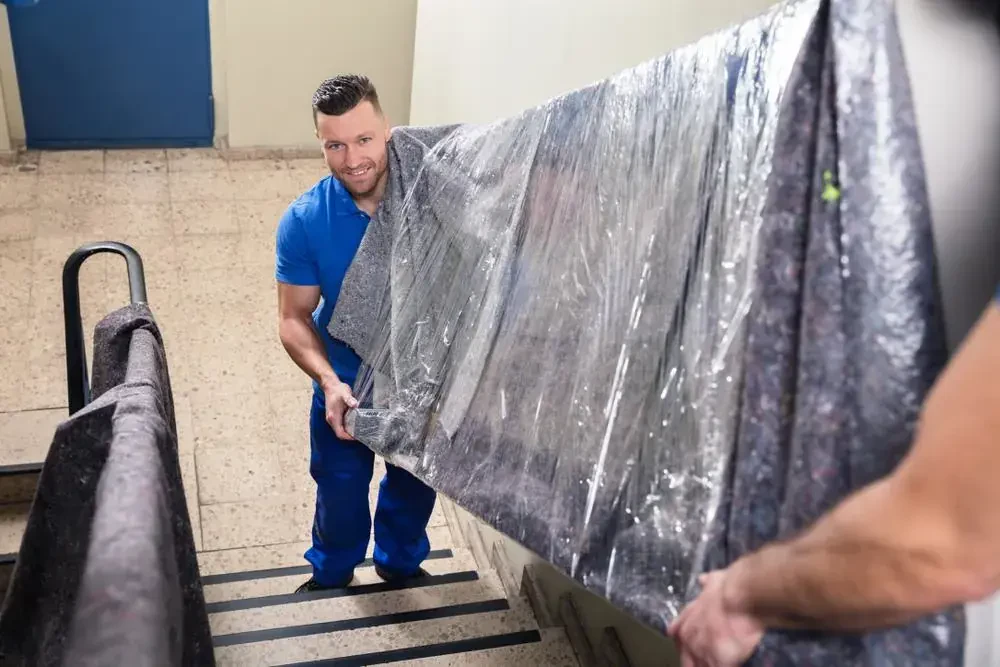
If the stairs you have to contend with are in your home, you’re going to want to take some steps to protect them. Furniture can cause a lot of dings and scratches, especially when it’s being moved up or down through a narrow area without a lot of room for error. The protective covering should be used on stairs, walls, and banisters just to provide an extra layer of protection. It’s important to remember, however, that what you use on the floor needs to be non-slip and firmly secured so that it doesn’t contribute to an accident.
Warp Furniture to Protect It
Just as stairs and walls need some protection, your furniture will too. In fact, covering your furniture helps protect both because it provides two layers or protection should you bump, nudge, or lose your grip on something on the stairs. Take special care with anything that has glass, and it doesn’t take a direct hit to cause damage. A good, padded blanket should do the job and you can add a layer of bubble wrap underneath if you’re dealing with something really delicate.
Consider Hiring Movers
And finally, if you’ve got a real challenge on your hands such as stairs that have a corner partway up, or difficult-to-relocate items, you should consider hiring haulers. They’re experienced in handling tricky corners and the up-and-down lifting of stairs and can be hired for just that portion of the move if you prefer. In other words, you can hire haulers just for the labor portion and not pay the higher cost of a full-service move.
Frequently Asked Questions
Start by clearing the stair path and measuring tight turns. Use furniture sliders, moving straps, and corner protectors to control weight and balance. Heavy items should be handled by 2–4 movers, with one person guiding from below. Break down bed frames and tables when possible. For large or awkward pieces, professional crews trained in stair carries reduce injury risk and wall damage during apartment or townhouse moves.
Wear shoes with strong grip, keep your back straight, and take short, controlled steps. Avoid twisting while carrying weight and rest every few flights. Plan moves during daylight for visibility. Hydration matters, especially in warm weather. Many injuries occur from rushing, so pacing matters more than speed. If stairs are narrow or steep, consider using a local moving service to limit strain.
Movers use lifting straps, stair rollers, and spotters to distribute weight evenly. Appliances are secured with padding and shrink wrap, then tilted at controlled angles to maintain center of gravity. Crew size increases for items over 250–300 lbs. Stair width, ceiling height, and landing space determine technique. Professional teams also plan rest points to prevent slips on long or curved staircases.
Yes. Use smaller boxes capped at 40–50 lbs to improve control on steps. Pack fragile items tightly to prevent shifting while climbing. Label boxes for stair-side placement to reduce extra carries. Avoid overfilled plastic bins, which can become slippery. A structured approach paired with a packing and unpacking service helps speed loading while protecting items and movers.
A studio or one-bedroom with one stair flight typically takes 2–4 hours. Multiple floors or no elevator can extend moves to 5–7 hours. Time increases with heavy furniture, long carry distances, and tight stairwells. Building rules, parking distance, and weather also affect pacing. Crews often add movers rather than time to keep stair-heavy moves efficient.
Many movers include one standard stair flight, then apply a stair or long-carry fee beyond that. Extra charges usually start after 1–2 flights or when stairs exceed 7–10 steps per flight. Fees reflect added labor, safety risk, and time. Clarify stair details during booking with a full-service movers provider to avoid move-day surprises.
Avoid carrying oversized boxes, skipping hand protection, or moving alone with heavy items. Do not leave loose rugs or shoes on steps. Skipping measurements leads to stuck furniture and wall damage. Another common mistake is underestimating fatigue. Planning rest breaks and assigning clear roles reduces accidents and keeps the move on schedule.