Published by Chris Townsend
Last updated Dec, 12 2025

New York is one of the most densely populated and heavily regulated states in the U.S. If you are trying to relocate within or outside New York, it will take you slightly more than just hiring a moving truck and loading your belongings. The state has a well-defined legal framework for moving companies to follow since they have to work around a hub of different business and in tight city spaces. Whether you’re moving across Manhattan, relocating upstate, or operating a business that offers moving services, it’s critical to understand the licenses and permits required at every level—city, state, and federal. These rules are enforced not only to keep roadways safe but also to protect customers from unlicensed and uninsured movers. This page outlines all the permits and licenses required to legally operate as a moving company in New York and the penalties for failing to meet these obligations.
New York requires all intrastate movers to obtain a license from the New York State Department of Transportation (NYSDOT). In addition to state-level rules, New York City has unique requirements that must be followed for loading, parking, and operating large vehicles. Federal registration is also required for interstate and international moving services.
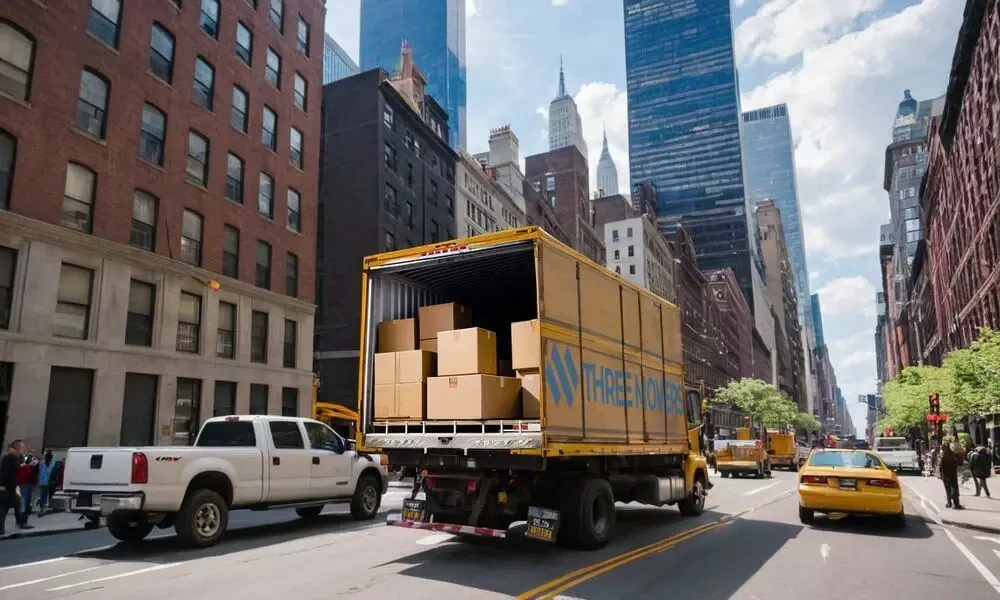
State-Level Requirements: New York State Department of Transportation (NYSDOT)
NYSDOT Household Goods Moving License
Any company that moves household goods within New York must apply for and obtain operating authority from NYSDOT. This license confirms that the business has met insurance, safety, and financial responsibility requirements.
Penalty for Non-Compliance: Companies operating without NYSDOT authority may face fines up to $5,000 per occurrence. Continued violations can lead to court orders, license denials, and even seizure of vehicles.
Insurance and Tariff Filings
Movers must provide proof of cargo and liability insurance and file a tariff with NYSDOT that outlines their rates, fees, and services. Tariffs must be updated and refiled periodically to remain in compliance.
Penalty for Non-Compliance: Failure to maintain insurance or submit a valid tariff can result in administrative penalties starting at $1,000 and may lead to suspension or revocation of authority.
Local-Level Requirements: New York City and Other Municipalities
NYC Temporary Parking Permits for Moving Trucks
New York City requires special parking permits for moving trucks to park legally at a residence or business. These Temporary No Parking Signs are issued by the NYC Department of Transportation (NYCDOT), and in some cases, companies must obtain Street Activity Permits through the NYC Street Permit Office.
Penalty for Non-Compliance: Parking without a proper permit can lead to fines up to $400 per violation, towing, or immobilization of the vehicle by the city.
Oversize and Overweight Vehicle Permits
Companies operating oversized vehicles in NYC or other densely populated areas like Buffalo or Rochester must apply for specific route-based oversize vehicle permits. These permits are often issued by NYCDOT or local municipalities.
Penalty for Non-Compliance: Operating an oversized vehicle without a permit can result in fines from $1,000 to $5,000, as well as additional towing and storage charges.
Vehicle and Driver Requirements
Commercial Driver’s License (CDL)
All drivers operating commercial vehicles must possess a valid Commercial Driver’s License (CDL) based on the gross vehicle weight and type of cargo.
Penalty for Non-Compliance: Drivers without a valid CDL can be fined $500 to $2,500. Employers may also be fined and face vehicle impoundment.
Vehicle Registration and Inspection
All commercial vehicles must be properly registered with the New York State DMV and undergo regular state-mandated safety inspections.
Penalty for Non-Compliance: Unregistered or non-inspected vehicles may lead to citations ranging from $300 to $1,000 and possible suspension of the company’s operating authority.

Compliance and Enforcement
New York has strict enforcement mechanisms to ensure movers operate within the law. The NYSDOT and local authorities conduct random inspections, audits, and compliance reviews. Violations may result in:
- Civil penalties between $1,000 and $10,000 per violation
- Suspension or revocation of operating authority
- Vehicle seizure and towing
- Court-ordered injunctions or criminal charges in cases of fraud
- Loss of insurance eligibility and inability to reapply for operating authority for several years
Consumers are encouraged to check a company’s license status using NYSDOT’s online search tool and the FMCSA’s Safety and Fitness Electronic Records (SAFER) system.

Partnering with Three Movers
Three Movers ensures every move in and out of New York meets all legal requirements, from city-specific parking permits to federal registration for long-distance moves. With all necessary state, city, and national licenses in place, we offer a safe, reliable, and fully compliant moving experience. Whether you're relocating within the five boroughs or preparing for an international move, we handle the logistics and legal requirements so you don’t have to.
Understanding New York's moving permits and licensing laws isn’t optional—it's essential. With some of the strictest penalties in the country for non-compliance, hiring or running a licensed moving company is the only safe option. From city permits to federal guidelines, this guide equips you with everything you need to know. And when you're ready to move, choose a team that already knows the rules.
Three Movers is here to help you move the right way—legally, safely, and smoothly. Call us now at (888) 202-0036 to plan a seamless move in and out of New York.
Frequently Asked Questions
New York moving permits and licenses are required authorizations that allow moving trucks to legally park, load, and operate during a move. In New York City, permits usually cover temporary curb use or no-parking zones, while licenses apply to moving companies operating commercially. Requirements vary by borough and building management. Costs and approval timelines depend on truck size, street type, move date, and duration. These permits are especially critical in dense neighborhoods where enforcement is strict and access is limited.
Yes, most NYC moves require a moving permit if a truck will occupy curb space, block traffic lanes, or load in restricted areas. Apartment buildings and co-ops often require proof of permits before reserving elevators. Permits are common for Manhattan, downtown Brooklyn, and busy commercial streets. Without a permit, trucks risk tickets or towing. Movers handling local moving companies services in NYC are typically familiar with these requirements.
Responsibility depends on your contract. Many full-service movers secure permits for you, while labor-only or truck-rental moves often require the customer to apply. Always confirm this in writing. Responsibility can also vary based on building rules, union requirements, and parking authority policies. When movers handle permits, it reduces errors and delays, especially for complex apartment or office moves managed through moving services.
Moving companies in New York State must hold proper state registration and insurance. Movers operating across state lines must also comply with federal interstate regulations. Licensing confirms compliance with insurance minimums, consumer protection rules, and operational safety standards. Customers should verify credentials before booking, particularly in NYC where enforcement is aggressive. Licensed providers are typically listed under verified interstate movers and state-approved operators.
New York City moving permits generally cost $40–$100 per day, depending on borough, curb length, and truck size. Oversized vehicles or multiple parking spaces can increase costs. Some buildings also charge separate elevator reservation or move-in fees. Prices are influenced by traffic density, street classification, and time of day. Early applications help avoid rush fees or last-minute denials that disrupt moving schedules.
Most NYC moving permits are approved within 3–10 business days, though peak seasons like summer and month-end dates may take longer. Same-week approvals are sometimes possible but not guaranteed. Delays usually stem from incorrect vehicle details, incomplete applications, or street event conflicts. Movers offering same-day movers services often plan alternative loading strategies when permits are delayed.
Moving without a required permit can result in parking tickets, fines, towing, or forced unloading delays. Buildings may deny elevator access or stop the move entirely. Enforcement is especially common in Manhattan and high-density zones. These penalties often exceed the cost of the permit itself. Using experienced movers who regularly manage NYC logistics helps prevent these disruptions and keeps moves on schedule.