Published by Chris Townsend
Last updated Dec, 24 2025
Whether you’re an eCommerce business looking to obtain quality products from Asia or an individual that wants to import some goods manufactured in China, you’re likely wondering how much shipping is going to run you. In short, freight a 20-foot container from China to the United States costs an average of $1,500 when imported to a port on the West Coast of the U.S. and around $3,500 for a port on the East Coast.
Though there’s much more to it than this and your actual rate will vary based on a number of factors. So, if you’re trying to estimate shipping charges when importing goods from China, we’re here to help.
This guide provides a comprehensive overview of all the costs involved in shipping a 20-foot container from China to the United States. Let’s dive in.
Cost of Transport The Container From Factory To Port
Once the production of your goods is complete and ready to make their way to America, your supplier will generally arrange for transportation from the warehouse to the designated Port of Loading. This is the first leg of the journey of importing from China. Fortunately, most Chinese manufacturers are situated around the coast and it’s incredibly rare for a port to be more than a three or four hour drive away.
The cost to transport an FCL 20-foot container typically charges around $480, but can differ by a couple hundred bucks. Though, local transportation is generally included in the FOB price.
FOB, which stands for ‘Free On Board’, refers to the stage in the supply chain when the seller surrenders ownership to the buyer. So, if you, like most other importers, bought according to FOB terms, the price is already factored into what you owe the supplier.
Factory to port transport cost: $50 to $480 (included in FOB)
China Export Clearance Charges
After the cargo has arrived at the port, it must be cleared for exports before it can be loaded and shipped out. The Chinese Customs Authorities, or ‘Hai Guan,’ make checks on about 10% of all outbound shipments. If a supplier is discovered to be exporting goods without the necessary documentation, they may be issued a fine.
Fortunately, all of the pertinent export clearance documents and procedures are included in the FOB price as well. If you stick to FOB transactions only, you’ll avoid a lot of hassle when it comes to importing.
Though, some assume they can save a couple bucks by ordering based on Ex Works (EXW) terms, which does not include local transport or export clearance documentation. In this case, you’ll have to buy export clearance documents from an export agent or licensed freight forwarder – which will charges you between $100 and $300.
China export clearance documentation cost: $100 to $300 (included in FOB)
Price To Ship A 20 Foot Container From USA to China
Undeniably, ocean freight is the cheapest way to transport goods from the factory floor in China to the United States. That said, the next leg of the journey is the shipment from the Port of Loading to the Port of Destination. You essentially have two options when it comes to shipping a 20-foot container from China – FCL freight or LCL shipping.
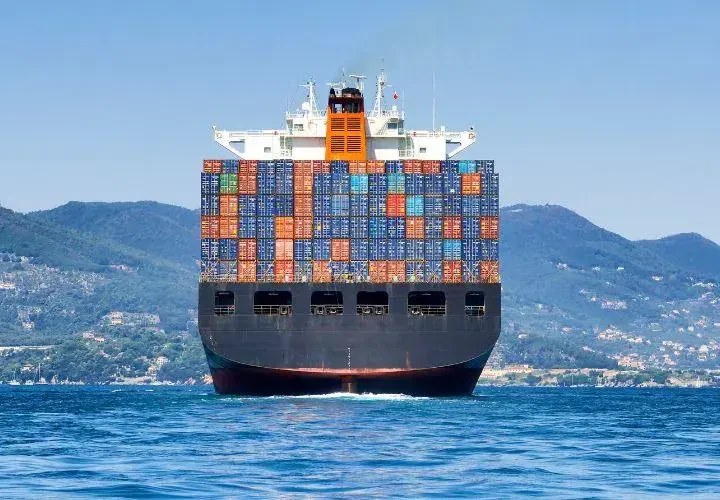
FCL, or full container load, refers to one full container load (whether 20-foot or 40-foot). It is generally the most cost-effective transportation method when importing from China to the USA. However, in order for it to be a viable option, you must be able to fill the entire container with goods. The price of FCL shipping depends on a number of factors, including volume and distance. That said, the following table outlines some price samples for FCL 20-foot containers for a range of routes from China:
| Route | Estimated Cost |
| Shenzhen to Los Angeles | $2,230 - $2,450 |
| Shenzhen to New York | $2,275 - $2,515 |
| Shenzhen to Hamburg | $1,445 - $1,600 |
| Shenzhen to Sydney | $690 - $760 |
| Shenzhen to Dubai | $1,445 - $1,595 |
For those that do not have a large enough volume to ship FCL, LCL shipping is an option. LCL, or less than container load, means that your cargo will be grouped together in the same container with other consignees’ cargo. This method allows importers to ship smaller volumes of cargo that are not sufficient enough to make FCL a feasible choice.
In terms of pricing, Less than Container Load (LCL) shipping rates are often very inexpensive – sometimes as low as $30 to $40 (USD) per cubic meter.
Port to port transportation cost: Varies based on weight, volume, origin port, and destination port.
Cost Of Insurance
Though not required, there really is no good reason not to purchase insurance. Since many Chinese suppliers use second-rate export packaging, it’s in your best interest to secure insurance for your goods. Should the cargo get damaged during transport, no compensation will be paid by the forwarder if you elect to not purchase insurance.
Shipping insurance is generally very affordable and will seldom cost you more than $50 to $100 (USD) per shipment. Though, keep in mind that insurance typically only covers the value of the cargo, when transport damage occurs. Therefore, it does not compensate for lost sales or charges related to product development.
Shipping insurance cost: $50 to $100
Port Charges
For first-time importers, the local charges at the port of destination are often an undesirable surprise. When you opt for FCL shipping, local charges are established by container, instead of per cubic meter. Though it’s difficult to estimate the actual cost, charges typically range between $500 and $1,000 (USD) per container. When freight LCL, however, local charges are determined based on volume.
Port charges: $500 to $1,000 per container
Customs Bond
When importing from China to the United States, importers must have a customs bond on file before their shipment’s departure. Though, this is only required if the goods are valued at more than $2,500. If the value is less, the goods can be imported under an informal entry without a Customs bond. However, the process requires that paperwork be submitted manually.
Customs bonds can be obtained through most Customs brokerages. You’ll choose from one of two types: single entry and continuous entry. As the name suggests, single entry bonds are intended for a one-time use, while continuous entry bonds can apply to all shipments over a year’s time. Single entry Customs bonds cost around $100 to $200 (USD) and continuous entry bonds cost $250 to $450 (USD).
Customs bond charges: $100 to $200 (single entry), $250 to $450 (continuous entry)
Cost Of Domestic Transport
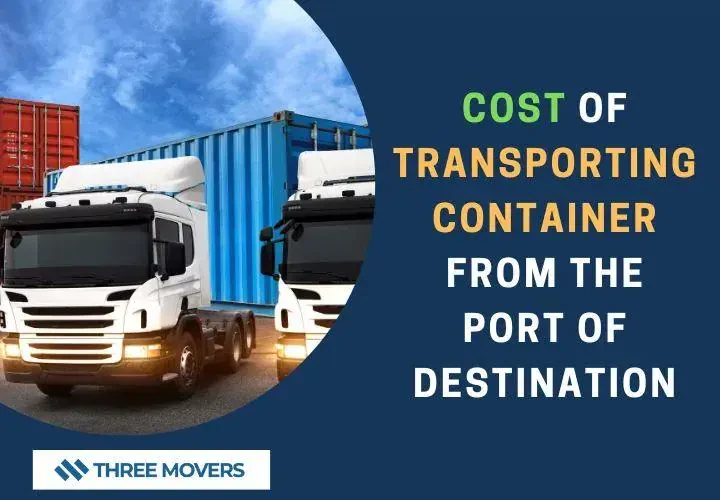
Last, but certainly not least, is the transportation from the Port of Destination to your home or warehouse. You will be notified a couple days before your container arrives and then when it does, you have two options: pick it up yourself or have your shipping agent deliver it. The latter will involve delivery via truck, rail, or a combination of the two.
The cost of domestic transportation for your 20-foot container depends entirely on the distance between the port and its final destination.
Frequently Asked Questions
Shipping a 20 foot container from China to the USA typically costs $2,800–$5,500 for port to port service. Pricing is driven by origin port, U.S. destination, carrier rates, fuel surcharges, and seasonal demand. Door delivery, customs clearance, and inland trucking usually add $1,500–$3,500. Full-service options bundle these charges under international moving costs to reduce surprise fees.
Costs are influenced by FCL container type, port pair distance, peak season surcharges, fuel prices, and carrier capacity. Additional charges often include ISF filing, terminal handling, customs duties, chassis use, and inland drayage mileage. Delays from inspections or congestion can increase storage fees, making route planning and documentation accuracy critical for cost control.
Average transit time is 18–25 days to West Coast ports and 30–45 days to East Coast ports, including ocean transit and port handling. Customs clearance typically takes 1–5 business days, while inland rail or truck delivery can add 3–10 days depending on distance and congestion. These timelines are common for overseas freight moves similar to those outlined in moving overseas shipping costs.
Yes. A 20 foot container usually costs 20–35% less than a 40 foot container on the same route. However, the cost per cubic foot is higher. A 20 foot container is best for shipments under 28–30 cubic meters, while larger shipments often achieve better value with a 40 foot container despite the higher base rate.
Most quotes are port to port only and do not include customs clearance, duties, taxes, or final delivery. These services are billed separately unless bundled under a full-service international move. Understanding these line items is important to avoid unexpected charges after arrival, especially for first-time importers.
Yes. After arrival, container unloading, drayage, and final delivery can be coordinated based on your destination city. This often includes warehouse transfers, scheduled unloading, and local placement. For West Coast arrivals, services are commonly handled through shipping container movers to manage port access, traffic patterns, and delivery windows efficiently.