Published by Chris Townsend
Last updated Jan, 21 2026
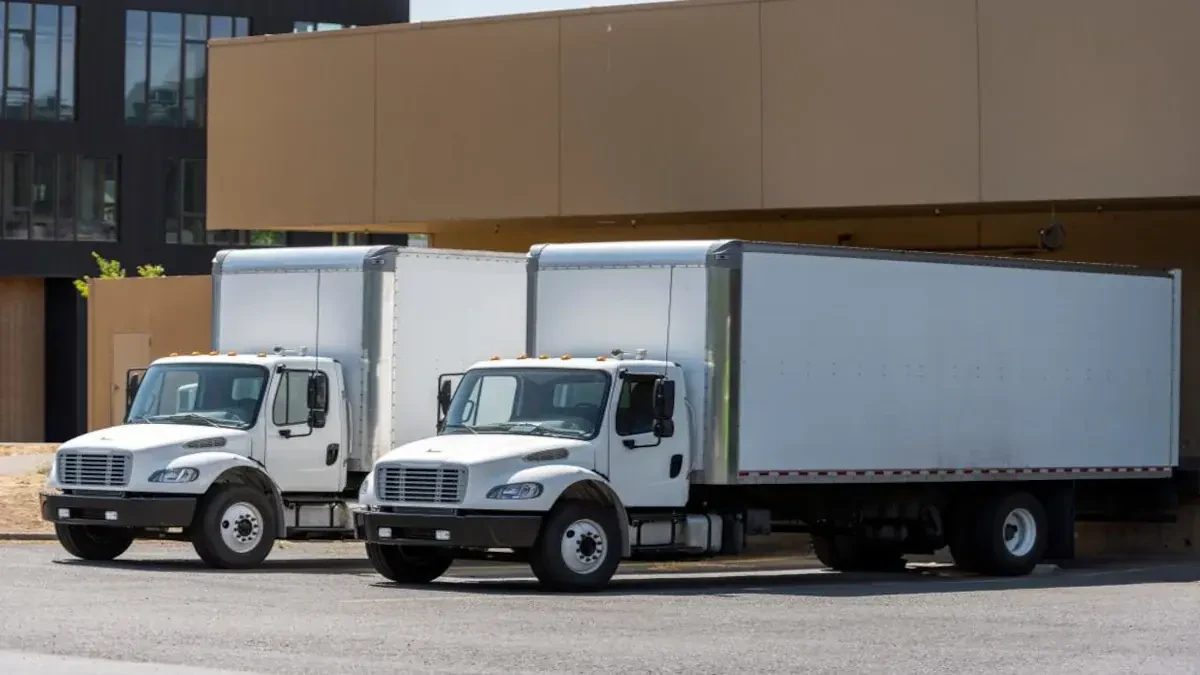
Boston Commercial Movers
Three Movers has conducted over a million residential and commercial moving jobs across all 50 states and the rest of the world. We facilitate hundreds of moves to Boston every year and have helped as many business owners on their journey to what some call the Hub of the Universe.
There’s no better way to prepare for a cheap haul and arrive in Boston than with us. We have the expertise, experience, and efficacy to get you started on the right track. Check out our testimonials and reviews to see what other customers have to say about their shifting experience!
How Much Do Haulers Cost?
The average cost for commercial movers in Boston averages a range from $1,099 to $10,352.
Our rates are calculated based on the mileage, or how far the local shifting truck has to travel, as well as the size or weight of the shipment. The final cost of the shipment is influenced by when you decide to ship, whether it's during the busy season or when demand is higher on a weekend, or start/end of the month.
Note that any additional service you include with your transport will attract an extra fee. Your move specialist is here to answer any questions you may have about finding the best commercial long-distance shifting solution for your business, and your budget.

Why Boston?
The location of your business is just as important as the services you offer and the quality of your work. The wrong location can mean failure, and worse, debt that can take a lifetime to repay. A good location combined with the right business model and services will almost guarantee success.
Here’s why you should consider Boston for your business:
Higher-Quality Workforce
Boston has one of the most educated and highly trained workforces in the entire country. In 2022, Massachusetts ranked #1 as the state with the highest number of undergraduate degree holders. As a matter of fact, it is one of two states with over half of the adult population earning a college degree (Colorado is the other).
What does this mean for your business? For one, it means you have access to some of the best and brightest professionals in the country. Two, you have a better chance of finding professionals with the necessary experience and expertise to suit specific roles.
Proximity to Major Markets
Boston has always been an important city for the U.S. economy, even before other states were settled and established. It served as a hub for companies and individuals to buy and sell goods, offer their services, and start a new life. Its location on the East Coast allowed the city to act as a gateway to Europe, and its proximity to Montreal and Nova Scotia made trade with Canada possible.
What does this mean for your business? This ultimately means more customers, not only those located in Boston, and a greater chance of success. This also puts you in an advantageous position when working with and meeting business partners.

Diverse Business Ecosystem
An economy can’t thrive on one industry alone, at least not for long. Shocks to that industry can mean economic tragedy, and in the blink of an eye, a once thriving population can be brought to ruin.
Boston has the 6th largest economy in the United States, and if it were a country of its own, it would be the 12th largest on the planet. Higher education is a major income earner for the state, but there’s also the biotech industry, tourism, government, and financial services to thank.
But, that’s not all. The engineering industry, insurance, IT, construction, maritime trade, and more all make up a part of the city’s diverse industry. There’s even a thriving start-up culture to usher in new businesses, and the infrastructure to back it up.
What does this mean for your business? A diverse business ecosystem means any type of business has the potential to survive in Boston, especially niche businesses that wouldn't necessarily thrive in your hometown.
Affordable Commercial Space
When compared to other major metropolitan areas, Boston has more affordable commercial spaces. Analysts have commented that small businesses form the backbone of the city’s economy, and this is all thanks to the regulations in place to keep property leasing affordable.
What does this mean for your business? A huge chunk of your initial investment will go towards leasing a commercial space, and it will form a large portion of business expenditure. Affordable commercial spaces reduce this expense and allow you to channel it elsewhere, whether it's to make improvements to your business, marketing, expansions, or whatever your business needs dictate.

Frequently Asked Questions
Boston commercial movers handle office relocations, retail moves, warehouse transfers, and light industrial projects. Services usually include 2–6 movers, professional loading, furniture disassembly and reassembly, equipment handling, and labeled placement at delivery. Projects are planned around after-hours or weekend windows to reduce downtime. Costs reflect move size, building access, elevator reservations, parking permits, and Boston traffic patterns. Many businesses use a dedicated commercial moving service for coordinated scheduling and compliance.
Boston commercial moving costs commonly range from $120–$200 per hour for a 2–4 mover crew, with larger offices priced by volume or scope. Pricing factors include square footage, number of workstations, packing labor, stairs or freight elevator access, long-carry distances, and loading dock restrictions. Downtown congestion and limited parking can add time. Multi-day or phased relocations are common for mid-size offices to limit operational disruption.
Small offices often move in 1 day, while mid-size spaces typically require 1–3 days, including setup. Larger corporate relocations may take a week or more using staged moves. Timelines depend on crew size, packing requirements, building access hours, elevator reservations, and traffic on I-90 and I-93. Many businesses coordinate with experienced office moving companies to manage loading windows and avoid peak congestion.
Yes. Professional commercial movers regularly handle desks, cubicles, conference tables, servers, and sensitive electronics. Items are padded, shrink-wrapped, and labeled for accurate placement. Disconnecting and reconnecting IT is usually coordinated with in-house teams or vendors. Extra planning is required for heavy items, tight stairwells, or historic buildings common in Boston’s Back Bay and Seaport districts.
Most Boston commercial movers offer evening and weekend moves to reduce business downtime. After-hours scheduling helps avoid weekday traffic, limited parking enforcement, and elevator competition. Rates may be slightly higher, but productivity is often better. Scheduling depends on building management rules, freight elevator availability, and local noise ordinances. This approach is common for retail stores and downtown offices with strict access windows.
Yes, movers handling out-of-state commercial relocations must comply with FMCSA regulations and hold active DOT authority. Interstate moves involve additional documentation, insurance requirements, and delivery windows compared to local jobs. Boston companies relocating to nearby states often combine local packing with regulated transport through an interstate moving service to ensure legal compliance and predictable transit times.